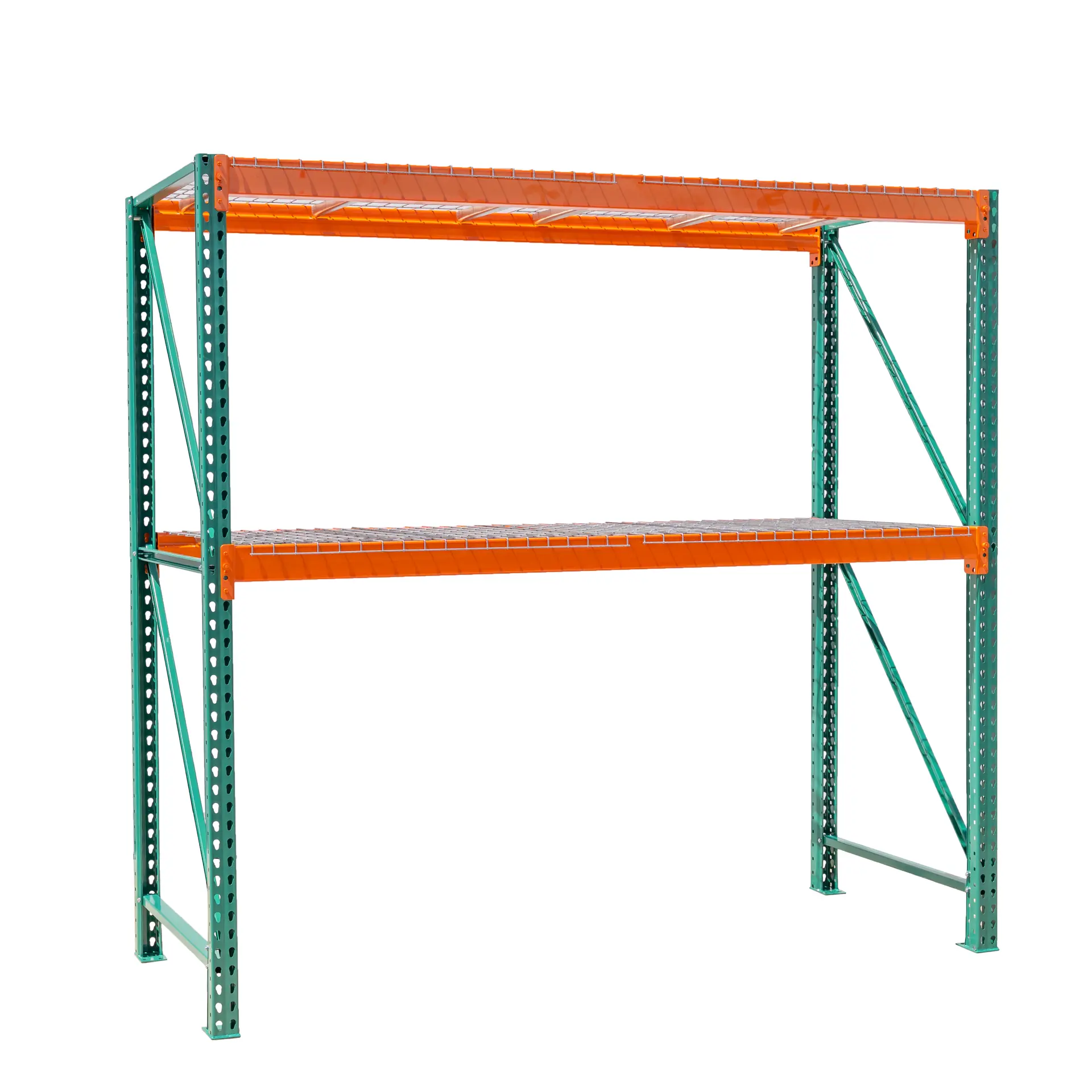
If you’re buying pallet racking, one of the most important things to understand is weight capacity. Choosing the wrong beam size or setup can lead to safety issues, damaged inventory, or costly replacements.
In this guide, we’ll break down pallet racking weight capacity by beam size, what affects load ratings, and how to choose the right setup for your warehouse.
What Determines Pallet Racking Weight Capacity?
Pallet racking capacity isn’t just about the beam, it’s a combination of several factors:
- Beam length (8 ft, 12 ft, etc.)
- Beam face height (4”, 5”, 6”)
- Steel gauge and construction
- Upright frame capacity
- Beam spacing levels
- Load distribution (even vs uneven)
👉 The biggest factor most people focus on is beam size, which is where we’ll start.
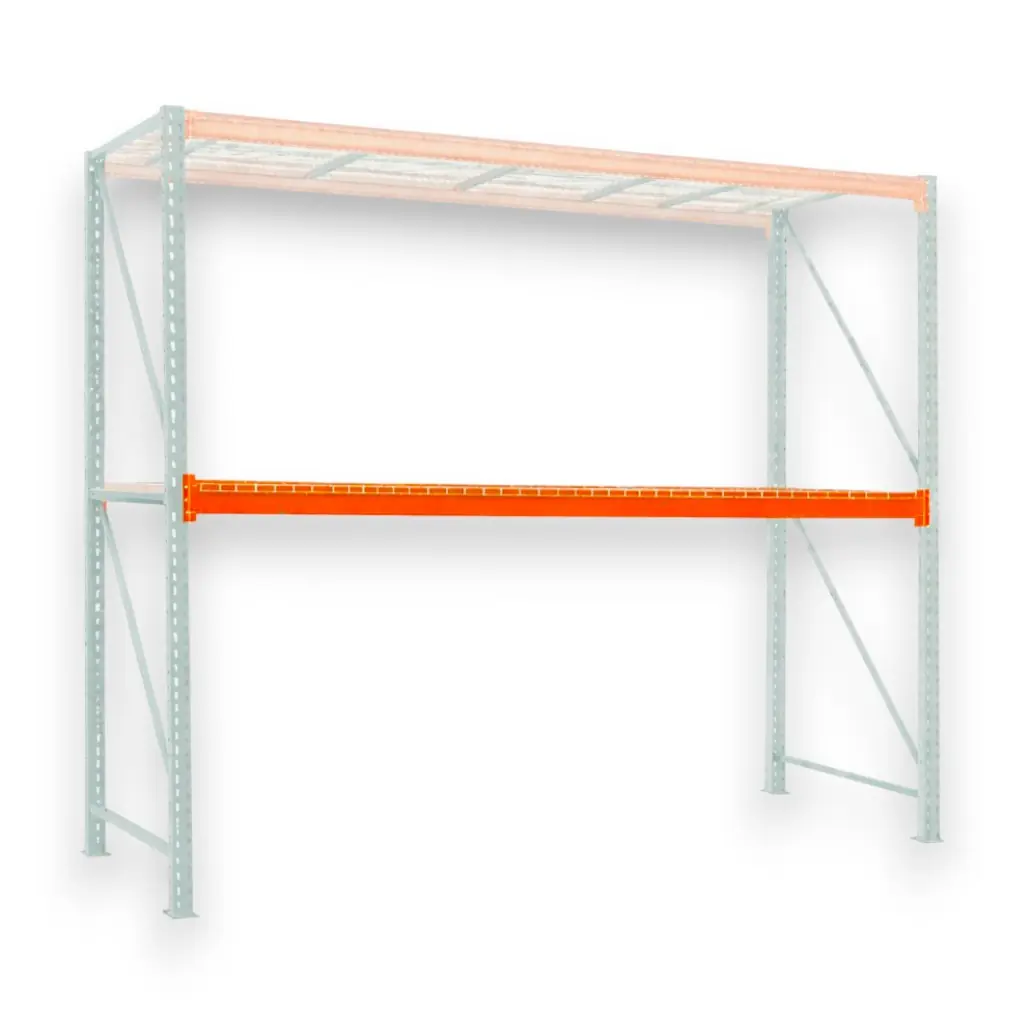
Pallet Racking Beam Capacity Chart (Common Sizes)
Here are typical capacities for standard teardrop pallet racking beams:
8 ft Beams
- 4” face beam: ~3,500 to 4,500 lbs per level
- 5” face beam: ~4,500 to 5,500 lbs per level
12 ft Beams
- 4” face beam: ~3,000 to 4,000 lbs per level
- 6” face beam: ~4,500 to 5,500+ lbs per level
👉 These numbers vary by manufacturer, but this gives a real-world baseline for most warehouses.
Why Beam Length Matters More Than You Think
Longer beams = more deflection = lower capacity.
For example:
- An 8 ft beam will hold more weight than a 12 ft beam of the same thickness
- That’s why 12 ft beams usually need a 6” face instead of 4”
If you’re storing heavy pallets, shorter bays can significantly increase your capacity and safety.
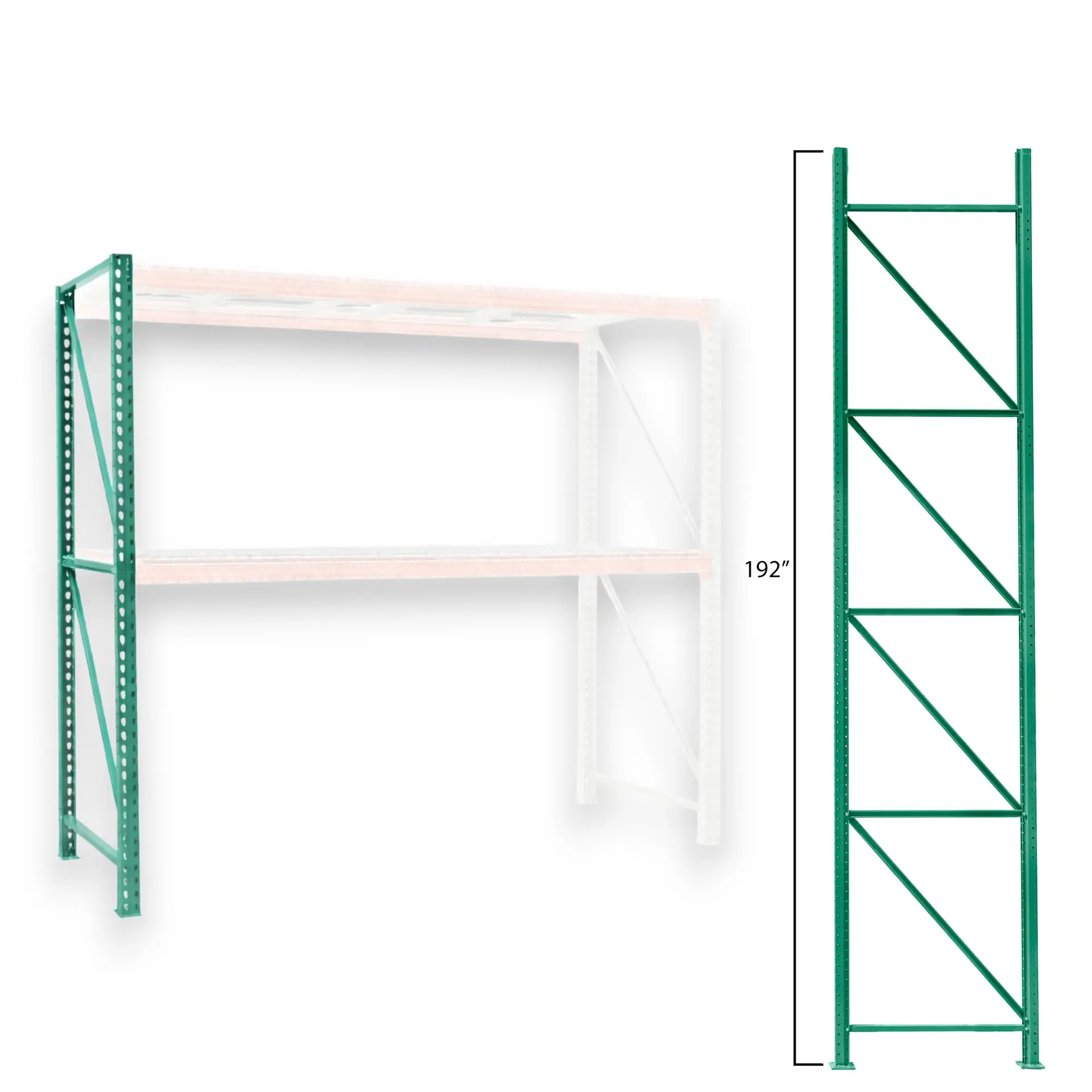
Uprights Also Limit Your Capacity
Even if your beams are rated high, your system is only as strong as your uprights.
Typical upright capacities:
- 8 ft upright: lower total load capacity
- 12–16 ft upright: higher total load capacity depending on depth and steel
👉 If you overload your uprights, it doesn’t matter how strong your beams are.
Even Load Distribution Is Critical
Capacity ratings assume:
- Weight is evenly distributed across the beam
- Pallets are properly centered
- No point loading (all weight in one spot)
Common mistakes:
- Stacking heavier pallets on one side
- Using damaged or bent beams
- Mixing different beam types on the same level
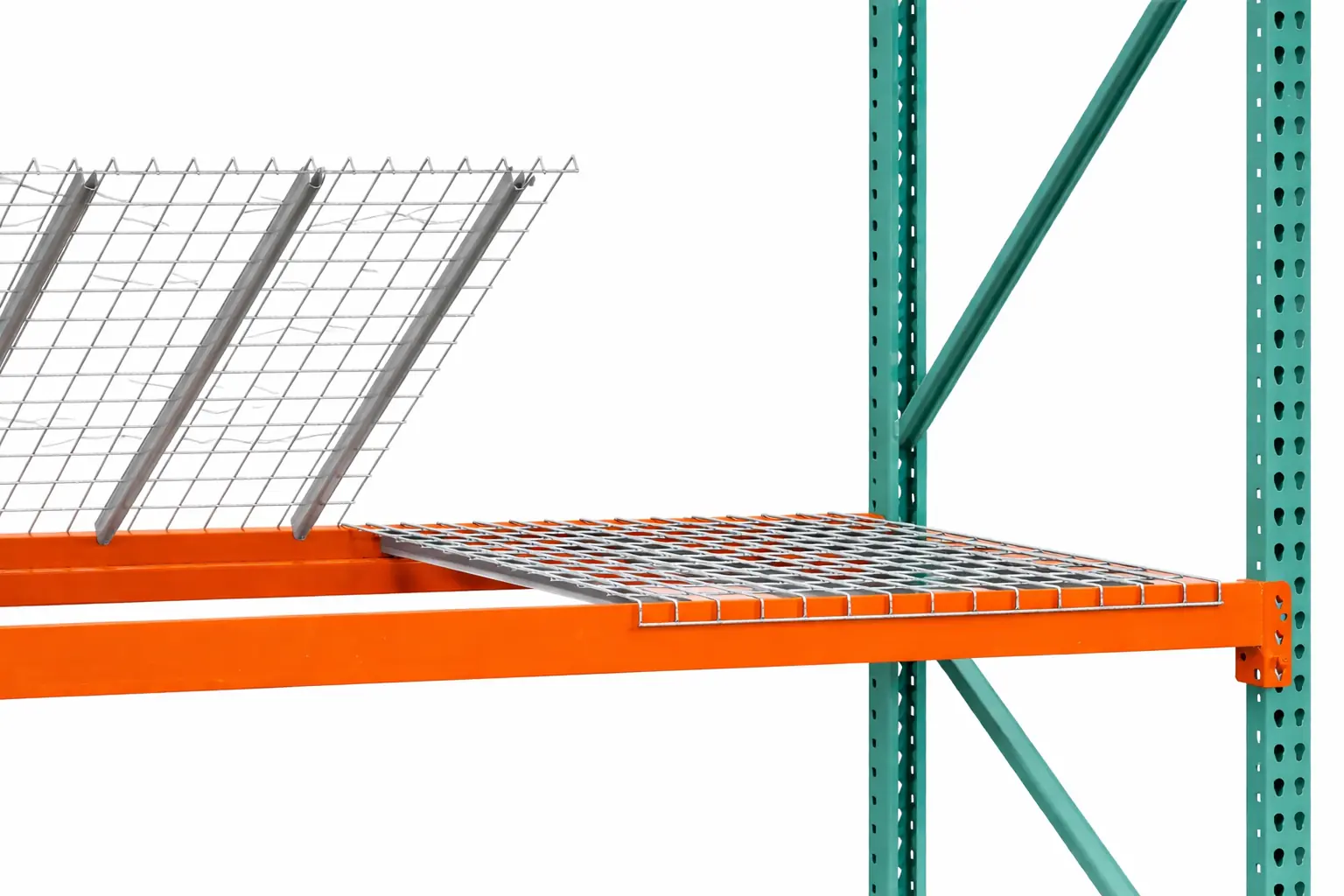
Do You Need Wire Decking?
Wire decking doesn’t increase beam capacity, but it helps:
- Distribute weight more evenly
- Prevent pallet damage
- Improve safety and compliance
For most warehouses, it’s a smart add-on, especially for mixed inventory.
Real-World Example
A common setup we sell:
- 12 ft x 6” beams
- 42” deep uprights (12–16 ft tall)
- Wire decking included
This setup typically supports:
- 2 standard pallets per level
- Around 4,000 to 5,000 lbs per level
👉 Perfect for general warehouse use without overbuilding.
How to Choose the Right Capacity for Your Warehouse
Ask yourself:
- What is the average weight per pallet?
- What is your heaviest pallet?
- How many levels do you need?
- Are you using forklifts or hand loading?
👉 If you’re unsure, it’s better to slightly overbuild than risk failure.
Need Help Choosing the Right Setup?
At BL Pallet Racking, we help businesses across Utah and Indiana design safe, efficient storage systems based on real inventory and warehouse needs.
We offer:
- New and used pallet racking
- 1–3 day delivery options
- Installation and layout planning
- Same-day local pickup on select inventory
If you’re not sure what capacity you need, we can walk you through it.
👉 Get a quote today or reach out and we’ll help you build the right system.